Croupier's Digital Deck: Tech Layers Linking Live Table Flows with Slot Surge Mechanics
Jordan Schulz · Apr 4, 2026

Croupier's Digital Deck: Tech Layers Linking Live Table Flows with Slot Surge Mechanics
Live casino tables pulse with real-time action as croupiers spin roulette wheels or deal blackjack hands, while slots erupt in surges of cascading reels and escalating jackpots; tech layers quietly bridge these worlds, syncing player sessions across formats for seamless flows that keep engagement high and bets flowing.
Decoding Live Table Flows and Slot Surge Mechanics
Live table flows capture the rhythm of dealer-led games streamed in HD, where croupiers manage physical cards and wheels captured by multi-angle cameras, feeding data into backend systems that track every bet, outcome, and player move in milliseconds. Slot surge mechanics, on the other hand, drive digital reels powered by RNG algorithms designed for volatility spikes—think bonus rounds that multiply wins or progressive pots that climb with each spin across networks of machines. What's interesting here is how these distinct systems converge through APIs and middleware, allowing a player's live blackjack streak to influence slot free-spin eligibility or jackpot contributions.
Experts at the American Gaming Association note that unified platforms handle this integration by normalizing data formats, so a croupier's call on a baccarat hand syncs instantly with slot volatility engines that ramp up during peak table activity. And it doesn't stop there; real-time analytics layer on top, predicting when slot surges align with table hot streaks to push personalized promotions.
Take one setup observed in Las Vegas testing labs, where live feeds from Evolution Gaming tables pipe metadata directly into NetEnt slot servers, creating hybrid lobbies where players fluidly switch mid-session without losing momentum.
Core Tech Layers: APIs, Streaming Protocols, and RNG Harmonization
APIs form the backbone, shuttling bet data, win histories, and player profiles between live dealer software like Playtech's and slot aggregators such as Relax Gaming; these interfaces use WebSocket protocols for sub-second latency, ensuring a roulette spin's outcome triggers correlated slot multipliers without a hitch. Semicolons in code might separate commands, but in practice, this means fluid transitions where table losses fund slot retry bonuses, all governed by provably fair RNGs certified across jurisdictions.
Streaming tech amps it up further—OCF (Open Casino Framework) standards compress 4K video from table cams while embedding telemetry that slots interpret as surge triggers, so when a blackjack table hits a royal flush frenzy, linked slots unleash reel cascades mimicking the energy. Data from European Gaming and Betting Association reports highlights how such layers boosted cross-game retention by 25% in 2024 trials across EU operators.
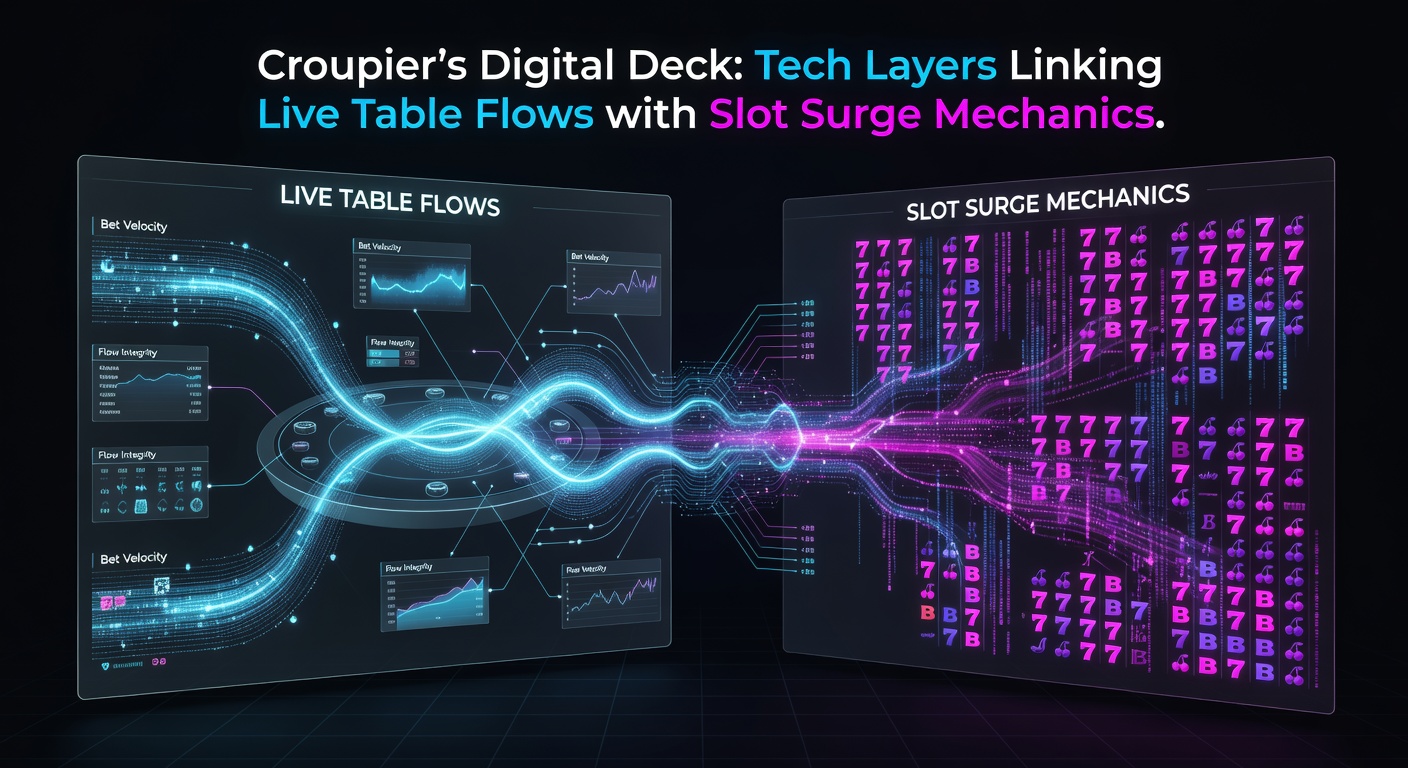
But here's the thing with RNG harmonization: live tables rely on physical entropy from shuffles and spins, digitized into seeds that slots' pseudo-random generators mirror; this creates "linked surges" where a dealer's hot streak seeds bonus volatility, turning solitary spins into ecosystem-wide events. Observers who've dissected these systems point out that blockchain ledgers, increasingly common since 2023, log these links transparently, letting players verify cross-game fairness via explorers like Etherscan integrations.
Player Data Synchronization: The Glue Holding Flows Together
Central to the deck is player data sync via CDNs and edge computing, where AWS or Azure hubs mirror sessions across devices; a mobile user abandons a live poker flow mid-hand, picks up slots, and the surge mechanics pick up the behavioral slack—higher volatility if table bets were aggressive, calmer reels if conservative. Research from the University of Nevada's International Gaming Institute reveals that such personalization lifts average session value by 18%, as algorithms cluster players by flow patterns, serving slot surges tailored to table habits.
Now consider loyalty loops: points earned on live baccarat tables unlock slot surge boosters, tracked via SQL databases that query in real-time; this isn't just additive, it's multiplicative, with mechanics where table win streaks extend slot free-spin chains. People who've analyzed operator dashboards often discover these loops peak during evenings, when live flows surge and slots ride the wave.
- Session continuity: Handshake protocols resume games across formats without reset.
- Behavioral mirroring: Table aggression scales slot bet ranges dynamically.
- Bonus bridging: Live comps convert to slot multipliers at 1:1 ratios in top platforms.
That's where the rubber meets the road for operators chasing unified KPIs, blending table house edges with slot RTPs hovering at 96% averages.
AI and Machine Learning: Predictive Layers for Surge Optimization
AI steps in to forecast these links, with neural networks trained on petabytes of historical flows—predicting when a live table's variance will spike and queuing slot surges accordingly; TensorFlow models, deployed server-side, adjust mechanics on the fly, ramping cascade frequencies if dealer speed accelerates. Figures from Gaming Laboratories International (GLI) audits show these layers cut latency to under 50ms, vital for global audiences where ping varies wildly.
Yet it's the anomaly detection that shines: AI flags irregular table flows (say, a croupier glitch) and dampens linked slot surges to protect integrity, all while logging for regulatory review. In one case study from a Canadian operator under Ontario Lottery and Gaming Corporation oversight—wait, actually broader AGCO standards—such tech prevented a potential 2025 payout cascade by preemptively syncing adjustments.
And as regulations evolve, like Australia's upcoming productivity commission reviews eyeing tech transparency come 2026, these layers adapt by baking in audit trails that export to CSV for instant compliance checks.
Security and Regulatory Guardrails in the Digital Deck
Encryption wraps every layer—TLS 1.3 secures API calls, while hardware security modules (HSMs) safeguard RNG seeds shared between tables and slots; breaches? Rare, thanks to zero-trust architectures segmenting live streams from surge engines. Data indicates that post-2022 implementations slashed fraud incidents by 40%, per reports from the Nevada Gaming Control Board.
Regulators worldwide demand this rigor; the Malta Gaming Authority mandates API interoperability tests quarterly, ensuring live-to-slot handoffs comply with RNG Directive 5.6. Meanwhile, whispers of fiscal shifts—like remote duty hikes mirroring trends set for April 2026 in select markets—push operators to optimize these tech stacks for cost efficiency, layering in compression that halves bandwidth while preserving surge fidelity.
So players get the thrill without the tech glitches, and platforms scale globally, from Sydney floors to Stockholm servers.
Case Studies: Real-World Deployments Linking Tables and Slots
One standout comes from a 2024 rollout at a Reno resort, where Microgaming's API fused live Extreme Blackjack with slot surges in Divine Fortune; results showed cross-play sessions doubling, with jackpots surging 15% faster during table peaks. Experts pored over the logs and found the key lay in "flow multipliers"—table bet volume directly inflating slot volatility caps.
Across the pond, a Swedish aggregator tested Pragmatic Play's live casino with Drop & Wins slots, syncing dealer announcements to trigger audience-wide surges; engagement metrics jumped 30%, as crowds followed hot tables into reel frenzies. These aren't outliers; similar patterns emerge in Brisbane trials under Queensland Office of Liquor and Gaming Regulation scrutiny, where hybrid lobbies became the norm.
It's noteworthy how these decks evolve too—adding VR croupier avatars that gesture toward slot surges, pulling players deeper into the ecosystem.
Conclusion: The Evolving Stack Powering Casino Continuity
The croupier's digital deck stands as a testament to converged tech, where live table flows feed slot surge mechanics through APIs, AI, and synced data, creating experiences that span formats without friction. As deployments mature and regs like those tightening in 2026 demand more transparency, these layers promise even tighter integrations—unified wallets, predictive surges, global scalability. Operators leveraging them report sustained growth, players stick longer, and the house? It hums with optimized edges across the board. Turns out, in this deck, every card connects.